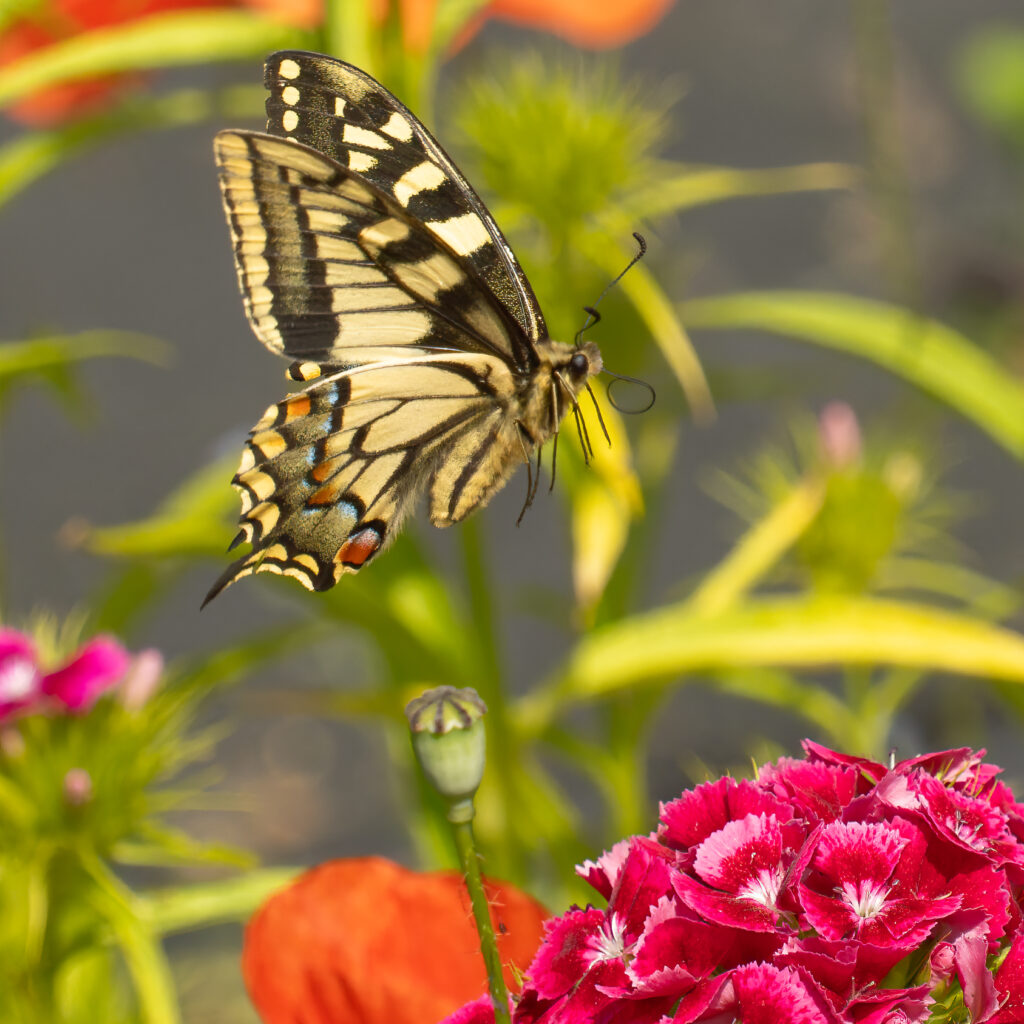
When it comes to capturing nature’s beauty on camera, Andrew Fusek Peters has few equals. Neil Thomas chatted with him about his latest book, and much more.
Andrew Fusek Peters is widely celebrated for the stunning photographs in which he captures the enchanting beauty and sheer diversity of Britain’s wildlife.
In colourful glossy books and eye-catching pictures in newspapers and magazines, the Shropshire photographer has frozen in time the wonders of the natural world around us.
While his art can take him to all parts of Britain in pursuit of these islands’ most cherished species, his latest work saw him initially travel no further than his kitchen.
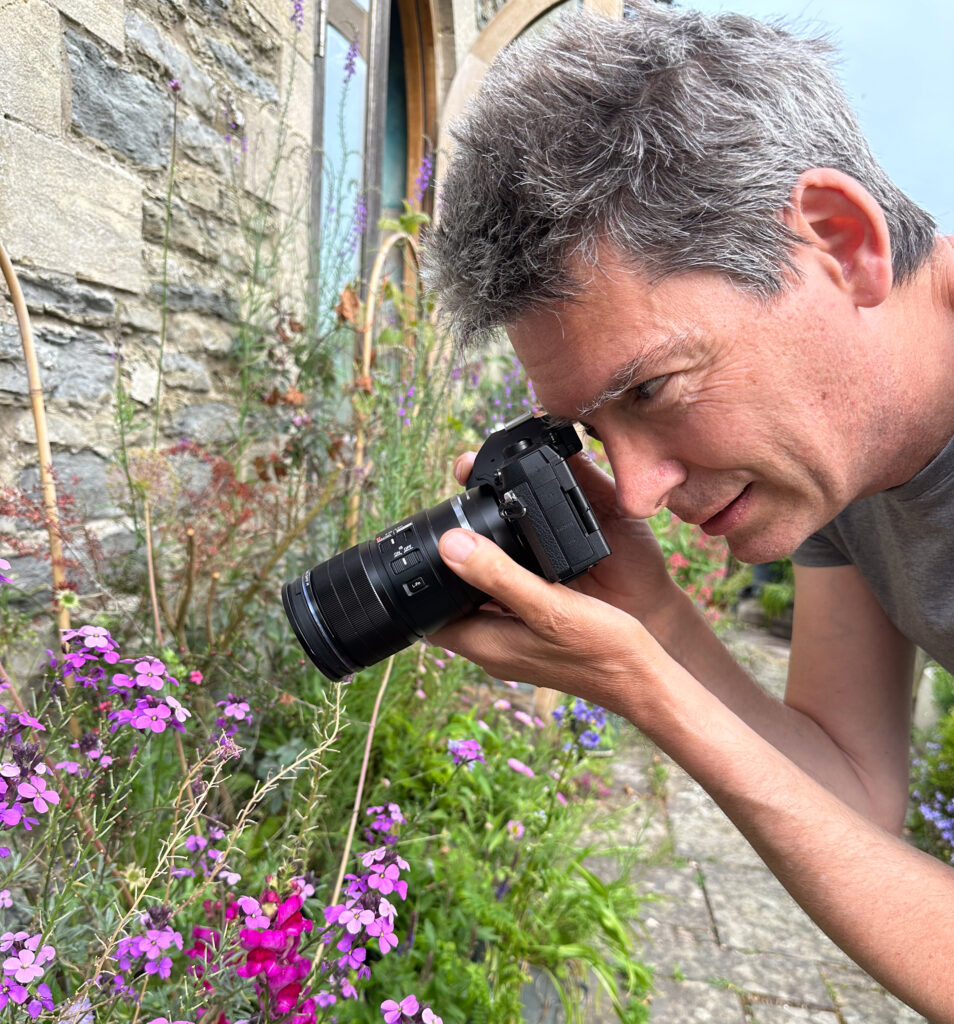
Garden Safari (2025) started as a project to look at the wide range of species to be found in an ordinary garden. He began, not unnaturally, with his own garden, beside the mid-Victorian converted chapel he shares with wife Polly at Lydbury North, near Bishop’s Castle.
The 60ft by 20ft plot is crammed year-round with plants to attract pollinators and birds. Adopting his customary ethical approach to wildlife photography, he tries to stay hidden from view as far as possible to limit human disturbance.
“My kitchen window provided the perfect ‘hide’ for training my lens on the bird feeders suspended from a tree outside,” he explains.
Friends then invited him into their gardens and, as the project developed, the definition of garden widened to take in allotments, arboretums, garden centres, parks, churchyards, backyards and cut flower businesses. Any place, essentially, in which greenery is under human care.
The result is an extraordinary collection of wildlife photography spread over more than 200 pages.
All manner of birdlife is showcased, from Sparrow, Blackbird, Wren and House Martin to Red Kite, Lesser Spotted Woodpecker, Sparrowhawk and Tawny Owl. And so many more.
Hedgehogs, butterflies, moths, moles, voles, worms, frogs, snails, woodlice, salmon, stoats, bees, wasps, badgers all take their turn in Andrew’s spotlight.
This is nature in action, too. There’s feeding, flight – and fight!
There are fascinating studies of the unusual – Brook Lamprey, for instance, which appear as miniature eels, around six inches long and the thickness of a finger. Andrew admits he knew nothing of them, his first sight being in a stream in a friend’s garden. “They looked like miniature eels writhing in gravelled shallows. The mouthless, blind larvae live buried in silts for up to six years and in summer develop a ring of teeth and a single eye as adults.”
He captured a rare image of a hare feeding her leveret on someone’s back lawn. “At the time, such an image had been photographed probably less than 10 times in the world. It felt amazing.”
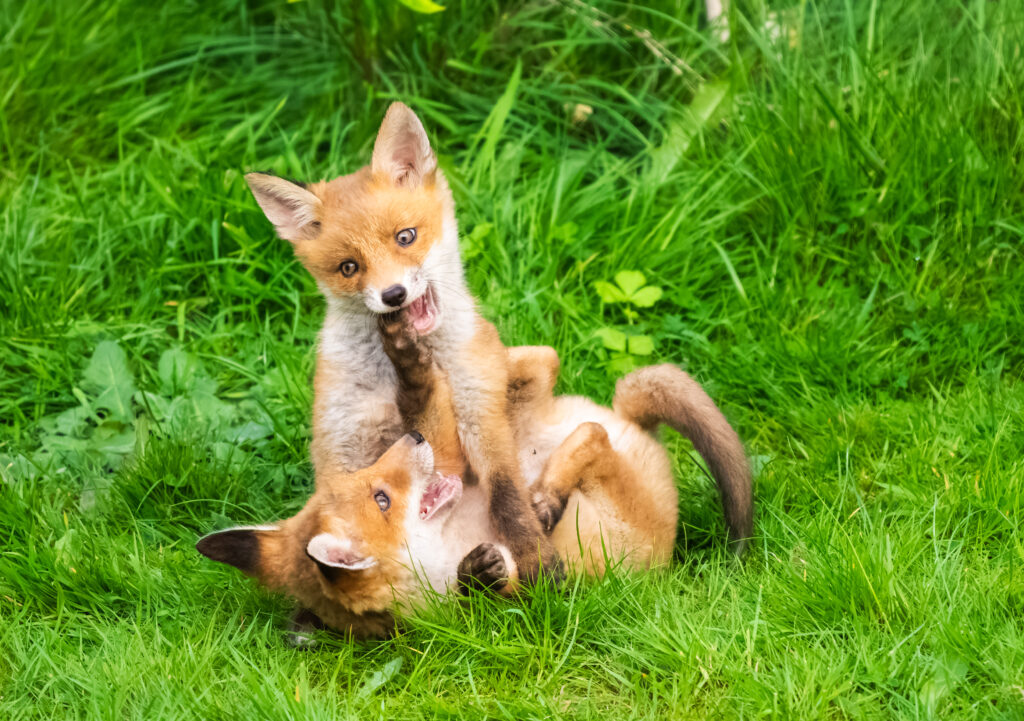
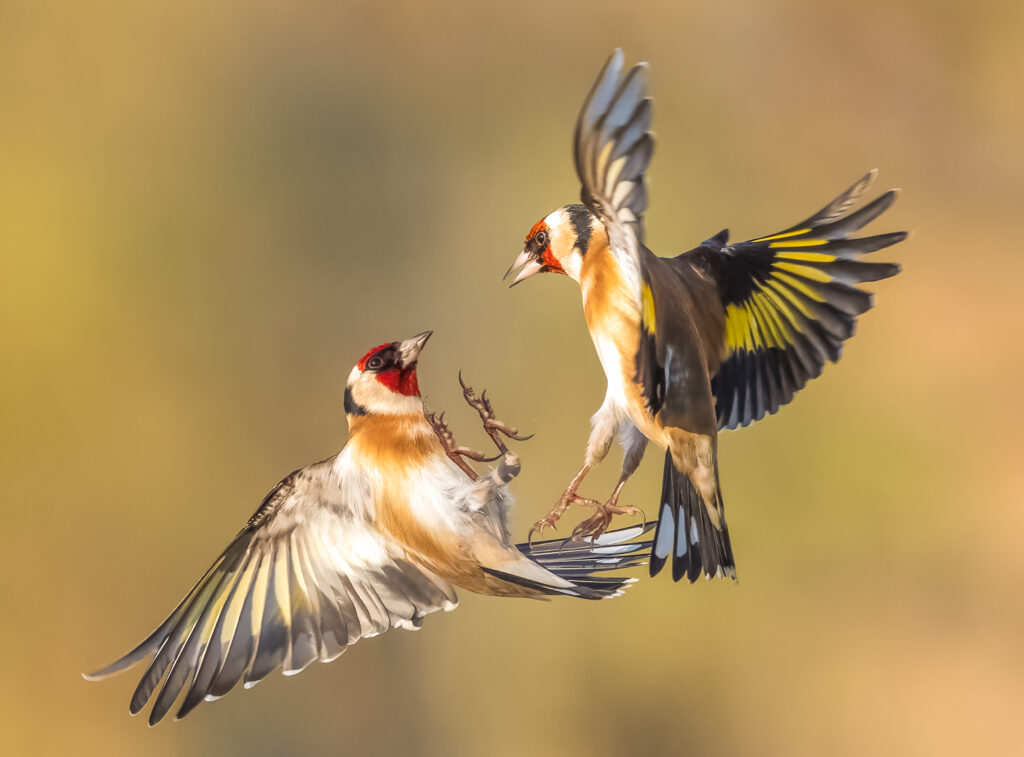
Other extraordinary images include a fox family playing in Clapham, London, and a pair of red squirrels on the Isle of Wight. A pair of bramblings fighting over food was one of Andrew’s favourite shots.
A vivid commentary threads through the book, detailing the fascinating stories behind the imagery.
Some of Andrew’s shoot locations are featured, such as Stokesay Court, near Craven Arms; Walcot Lake at Lydbury North; Hurdley Hall Gardens at Churchstoke and Cuan Wildlife Rescue, near Much Wenlock.
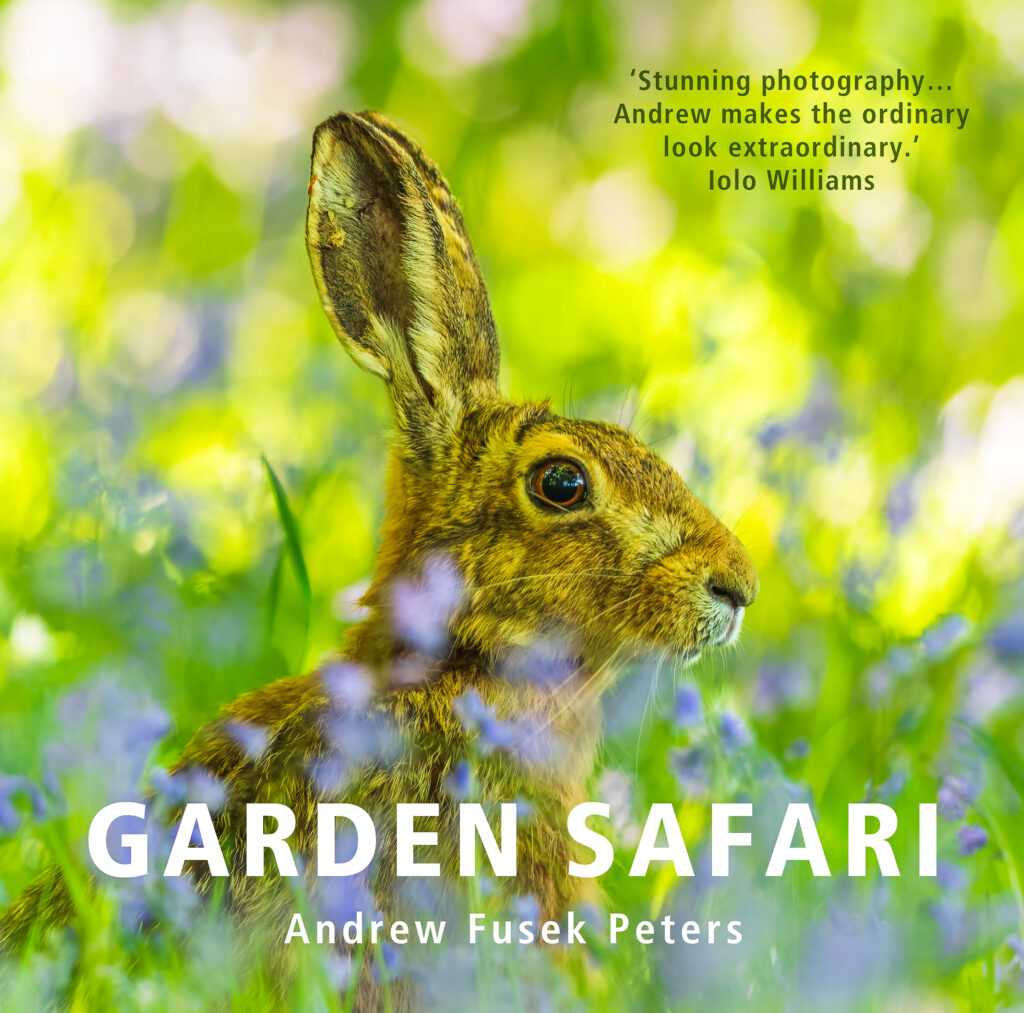
Garden Safari has won praise from no less a wildlife expert than Iolo Williams, the ornithologist, television presenter and author, best known for his BBC and S4C nature programmes including the perennially popular Springwatch.
He contributed a short but striking cover foreword to the book that simply reads: ‘Stunning photography. Andrew makes the ordinary look extraordinary’.
The book is also something of a rallying cry, Andrew says.
“There is so much we are powerless over in the world today, but there are things we do have control over including what we do in our gardens. Our actions can be both local and useful. Perhaps we can transform our over-manicured spaces into more wildlife-friendly havens. Instead of travelling to a nature reserve, we can create one right outside our window.”
Garden Safari took three years to put together and follows Andrew’s hugely successful 2023 book Butterfly Safari, that saw him travel the length and breadth of the British Isles on a mission to photograph examples of all 60 or so native species – from the Scotch Argus in the Scottish Highlands to Glanville Fritillaries on the Isle of Wight.
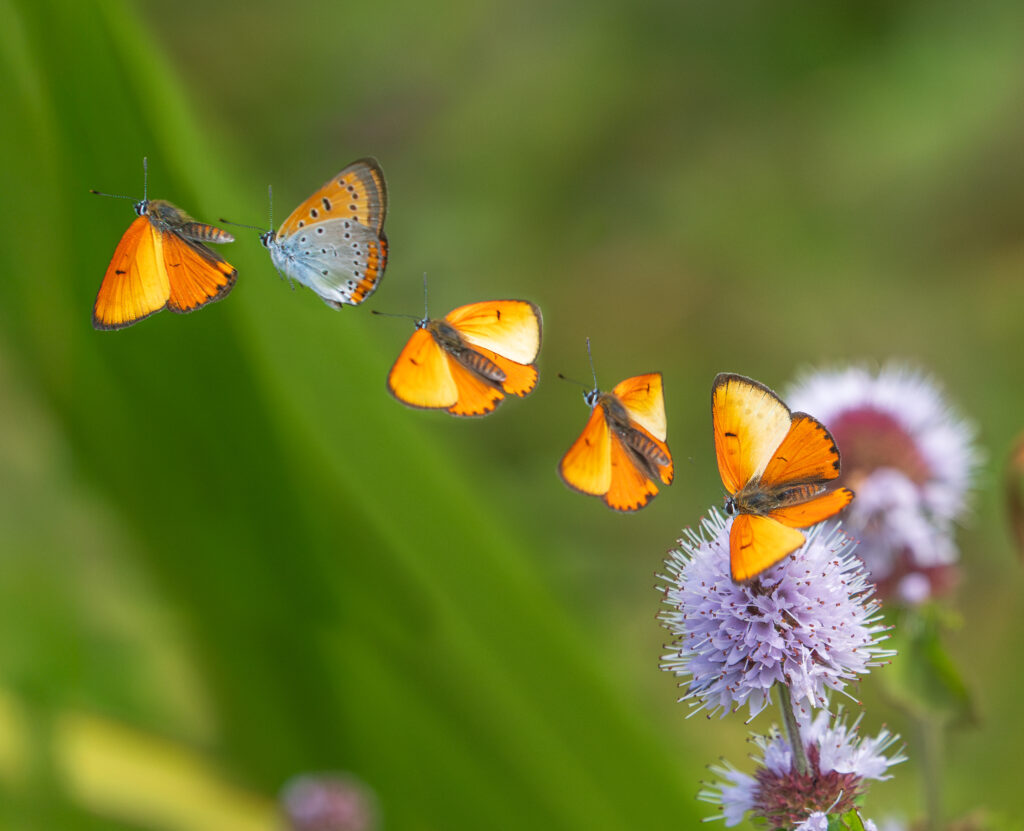
The result is a wonderful collection of intimate studies, including rarely-captured images of butterflies in flight, and remarkable close-ups of scales, eyes and antennae.
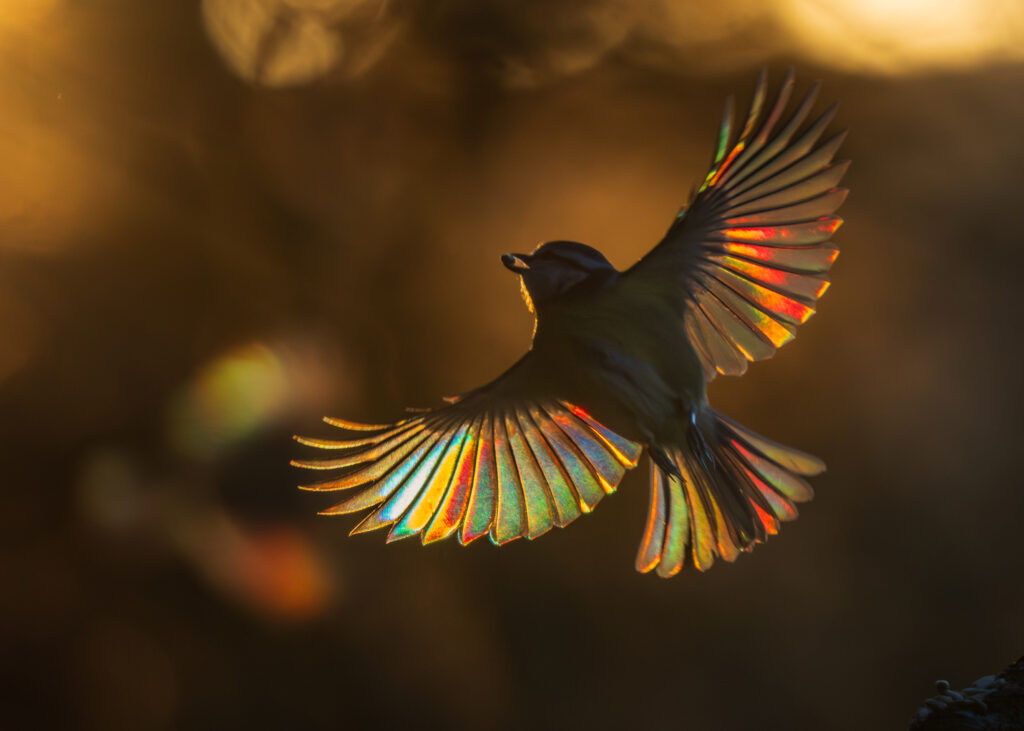
“I wondered why so much butterfly photography doesn’t feature them actually in flight. It’s an amazing sight and I was determined to capture it.”
He perfected a high-speed photography technique to make time virtually stop (one four-thousandth of a second!) while retaining the sense of motion. The results are amazing.
The book’s text describes the habits and habitat of each species and the location of the shoot.
Andrew’s intense love affair with butterflies began to take shape during the Indian Summer of 2018. He was in a very dark place, having just been diagnosed with bowel cancer. He was suddenly confronted with thoughts of his own mortality at the age of just 53. While awaiting surgery for the life-threatening condition, he found solace in his garden.
“It was on those warm afternoons, as I was trying hard not to dwell on the future, that I took pleasure in watching the Painted Ladies and Small Tortoiseshells enjoying the flowers’ nectar.
“I then started trying to work out how to capture their aerial antics with my camera. After many false starts and blurry pictures, I got a few decent results. It also meant I was living in the moment, totally focused on the beauty in front of me, and was able to briefly forget about what was to come.”
What was to come was a major operation and punishing sessions of chemotherapy – “awful, worse than the illness itself,” he recalls. Indeed, the debilitating fall-out of the treatment saw him cut short a dream lecture tour on a cruise ship in Alaska.
In the meantime, his butterfly photographs had attracted media attention, and an approach from a publisher.
“I began to work on a book of UK species. When I was given the medical ‘all clear’ in January 2020, it made me realise that I had so much to live for.”
Within a few weeks the Covid pandemic had, of course, brought in lockdowns. By the time the tough restrictions were lifted, Andrew was fit enough to travel – to walk in the Cumbrian Fells to capture Mountain Ringlets – and the safari really took shape.
Though he journeyed widely in Britain for his two safari publications, his hugely successful 2020 work, Hill & Dale is a love letter to Shropshire. A deep emotional engagement with the natural beauty of our county underpins every image in this sumptuous coffee table book of nearly 200 pages of stunning photography.
A well-researched behind the scenes commentary relates how the images were captured, with a writing style that mixes the conversational and poetic. The book, subtitled My Shropshire Year, explores the county’s sumptuous landscapes and fascinating wildlife across the changing seasons, with a chapter devoted to each month.
The national lockdowns of 2020 and 2021 had a big effect on Andrew’s business.
The cancelling of public gatherings because of the Covid-19 risk meant a lucrative income stream dried up.
“I was giving a lot of talks, to camera clubs, WIs and other groups and that’s where I make a lot of my money, selling my books there. That temporarily dried up which made life tough. Thankfully life is back to normal.”
On the upside, though, Andrew believes the constraints of lockdown – particularly the absence of traffic and light pollution – saw the natural world flourish.
“I think there was definitely a sense that as the human world came almost to a standstill, wildlife came to the fore. It was an opportunity for people to slow down, reflect on what is important and perhaps appreciate the world around them more, and that can only be a good thing.
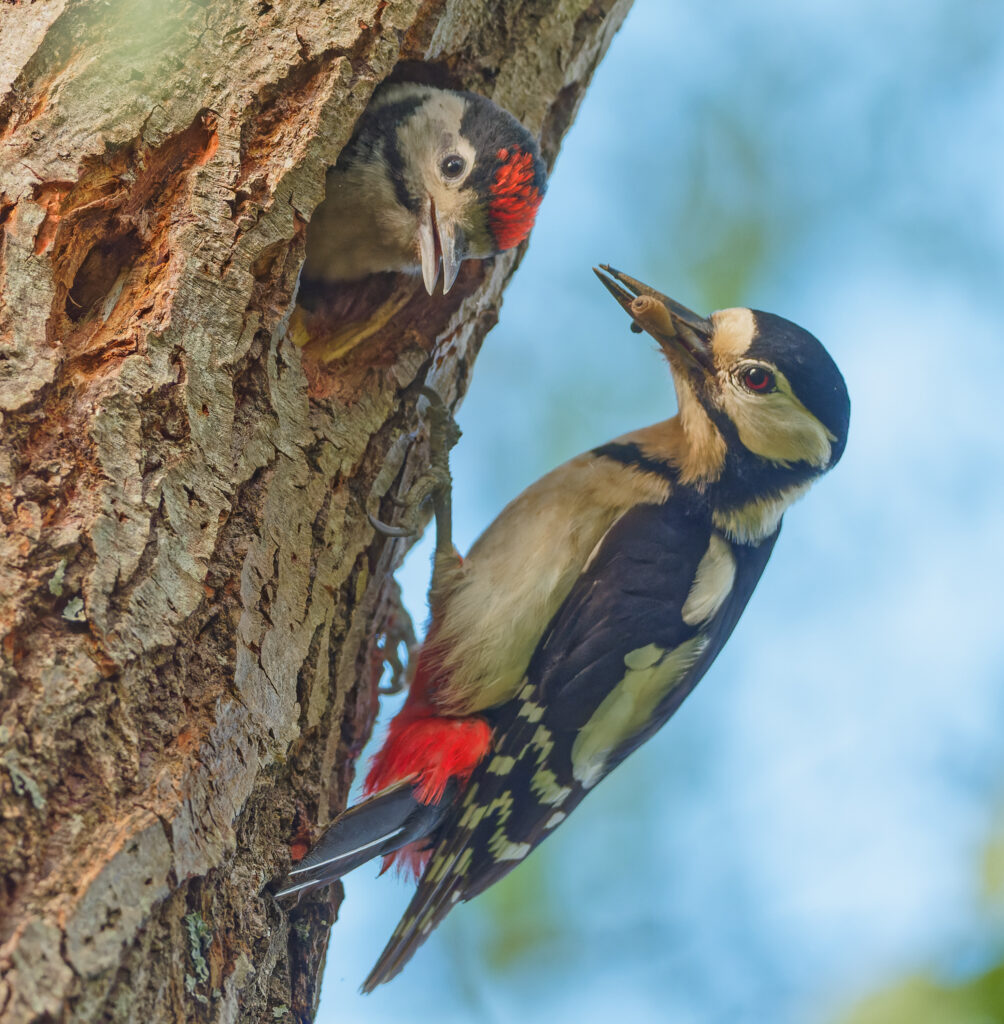
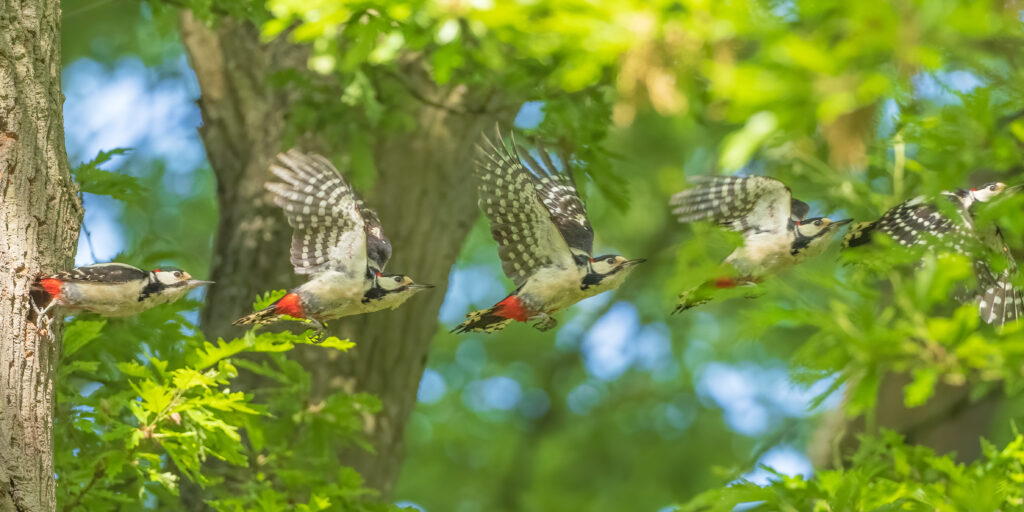
“It was during lockdown that I saw my first woodpecker, which was so exciting. In fact, I discovered a nest with five woodpeckers.”
Andrew’s home is at the heart of some of Shropshire’s loveliest countryside.
“For Hill & Dale I wanted to go deeper into what’s here. I don’t need the Serengeti when I have Shropshire. There is so much to explore, so much wonderful life that is sometimes hidden from casual view but can be found if you know where to look and have the time and patience to wait for it.”
Patience and hardiness are essential for the dedicated wildlife photographer but the rewards are perfectly illustrated by Hill & Dale. A siskin and goldfinch squaring up, dawn over the Long Mynd, a rare yellow-necked mouse, an adder at Whixall Moss, an emerald damsel fly at sunset, an alarming image of an aggressive male swan, a wild foal at Stretton, starlings turning the sky black, leaping salmon, snowy landscapes and hills shrouded in mist, remarkable shots of star-filled skies. There is a spirituality in Andrew’ photographs that shines through in his books.
Born in Germany, his mother was the Czech-born stage and screen actress Vera Fusek whose TV credits include Dr Who and Frontier in Space. Andrew had grown up on the edge of London and attended Corpus Christi, Oxford, so was something of a city boy. However, he fell in love with Shropshire when he met Polly, who had spent her teens in the county.
“Most Friday nights after work she would drive me to her mother’s house in Little Stretton. We headed up Small Batch onto the Long Mynd where a steep climb brought us to the source of the stream. To my urban eyes, this spot was a miracle.”
The couple married in 1991 and had intended to set up home in Bristol.
“At the very last minute, we pulled out of buying our first house and found instead a new home in Bishop’s Castle. We moved into the Old Chapel 30 years ago and have never looked back. We’re so glad we came here.”
Against this idyllic backdrop, the couple have brought up their daughter Rosalind, now in her early 30s and a journalist in London, and son Asa, who’s in his mid-20s and a gardener in Shrewsbury.
“One of my hobbies now is to go bouldering with him. I’m really into it. It is our father and son bonding time which is so precious.”
The calibre of Andrew’s photography, which has garnered many accolades, is all the more remarkable because it is his second successful career. It follows 25 years as a children’s author. With the soubriquet The Very Tall Poet – he stands over 6ft 8ins – he performed his poetry in schools and festivals, including Hay, Cheltenham and Edinburgh as well as abroad. He published more than 100 books – many in partnership with Polly – and made recordings for the Poetry Archive and numerous radio shows including on BBC Radio 3, 4 and 5.
However, after a quarter of a century of unstinting dedication to his art, he admits he felt “burnt out”.
“Photography gave me a new vision and purpose. I had walked the hills and valleys of Shropshire many times but the camera added focus and passion. With wildlife there came a deep and abiding love and respect.”
That has seen him build relationships with landowners and conservation bodies such as the National Trust and Natural England.
“In my work with wildlife I always put consideration for the species first. I am constantly amazed at how wildlife co-exists with humans, nesting in trees overlooking busy roads, making homes in gardens. My aim is to show intimate moments while always being immensely careful about disturbance.
“By sharing such beauty, I hope to make people think about conservation and about what we are in danger of losing.”
He has a national profile, and not just through his books. He has sold hundreds of photographs to national newspapers, magazines and periodicals. His images have appeared on the front of The Guardian, Daily Mail and The Times and the covers of BBC Wildlife, Amateur Photographer, Wild Planet, Digital Camera, Country Life and The Countryman. National publications regularly carry inside spreads of his work.
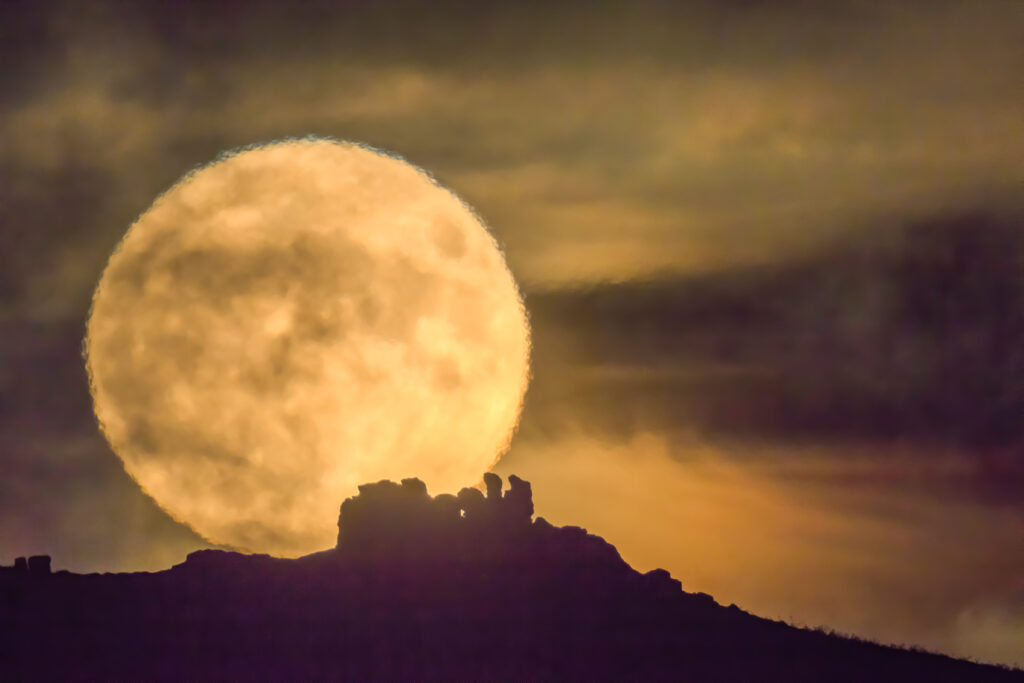
Several of his picture stories, including the 2016 supermoon, and his fighting stallions on the Long Mynd made half a dozen national papers on the following day.
He is particularly thrilled to have made the cover of Country Life, the august weekly periodical that has championed British rural fashions, nature and the countryside for nearly 130 years.
His superb close-up image of a butterfly made the magazine’s cover in June 2023.
“I told them ‘I’m honoured to be on the cover of Country Life’. They replied: ‘No, we’re honoured to have your work on our cover’. That meant a great deal.”
He has also been keen to support the local media and innumerable examples of his work have featured in regional newspapers and magazines over the years.
Andrew remains physically fit, thanks to years of physically-intense hobbies such as squash and wild swimming. Indeed, his book Dip charts a year swimming in rivers, lakes, waterfalls and hidden pools in untamed landscapes.
Aged 60 and cancer-free, his philosophy is to make the most of every day.
“I felt in many ways that my recovery from such a serious illness has given me a second chance at life and I’m determined to grab it with both hands. I’ve learnt to value each moment,” he reflects.
“That surely has to be the approach for us all.”