Ed is enchanted by an annual ritual – fleeting, mesmerising, older than the dinosaurs.
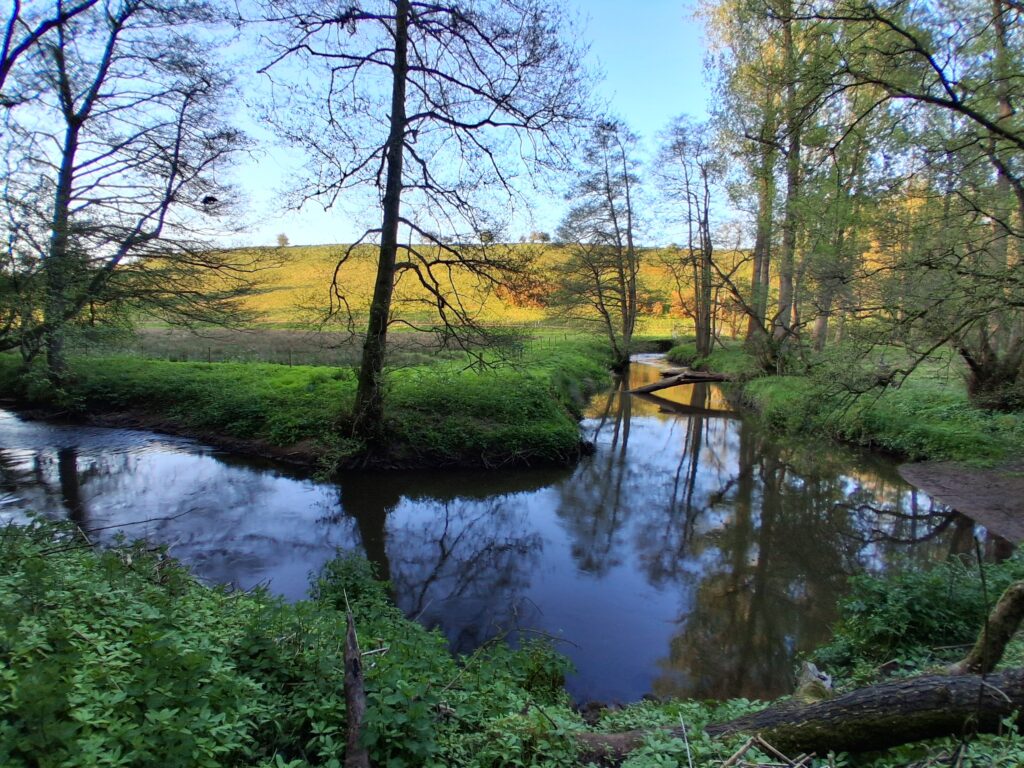
The way to the river is through a dry valley, fizzing with mayflower blooms and the sound of a whitethroat.
The way then becomes edged in leafy boughs and dipped in a hundred shades of bluebell.
And then the river sweeps into view, set in its own valley of sandstone cliffs and alder trees.
The water is fast and bubbling and then, just like that, it is slow and viscous. Somewhere within this cauldron, a curious alchemy is under way. Nymphs with long, segmented bodies that have been living buried amongst the sand and silt of the riverbed for two years are slowly moving to the shallow margins. Here they will creep from the water and enter into a state of metamorphosis, before being re-born as an adult mayfly.
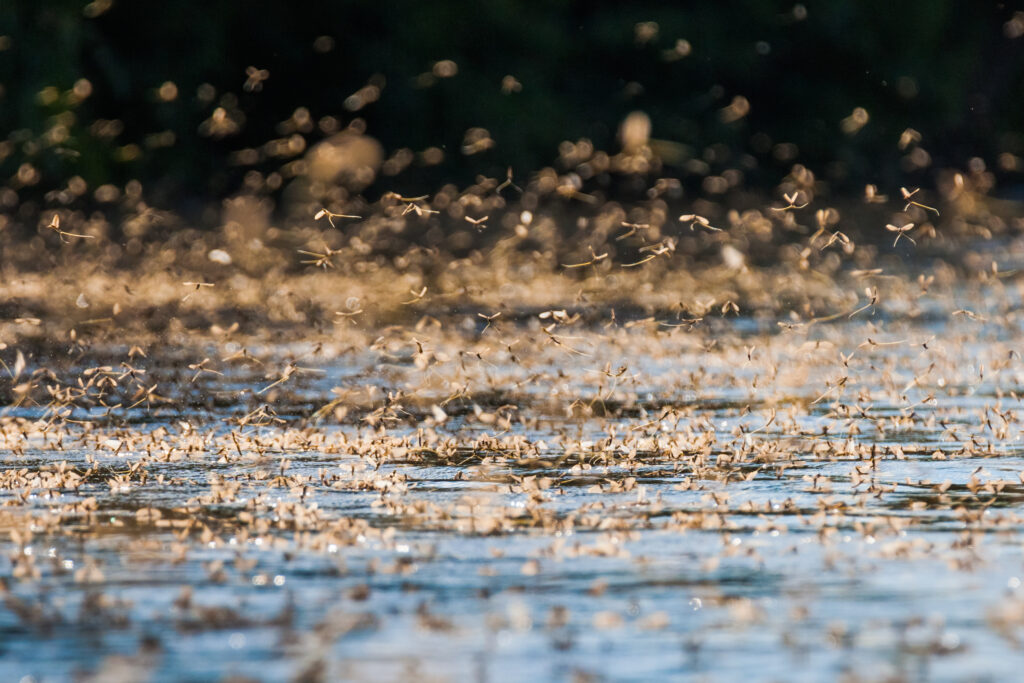
The mayflies will enter the airspace above the river. They will have one day, and one day alone, to find a partner and mate on the wing. They will not hunt other creatures, nor will they feed on nectar. These beguiling insects do not even have mouthparts, for theirs is a simple existence fuelled by the insatiable desire to reproduce.
Nuptial dance
The mayflies will form large aggregations as they attempt to find a mate and can be seen dancing an extravagant nuptial dance. Once mated, the female mayfly will dip
her abdomen back into the surface of the water, laying fertilised eggs which will slowly fall to the riverbed. And so, this remarkable life cycle will begin all over again.
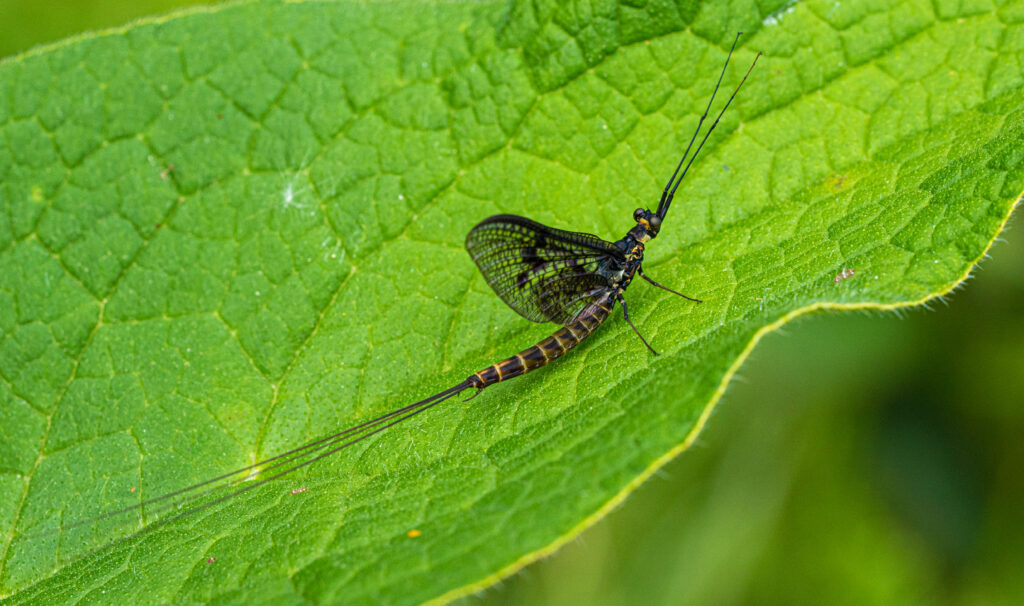
In the UK, the term mayfly actually covers a group of 51 species, each with a slightly different emergence time. But of all the species, there is just one that can truly be called the mayfly, for it appears above our rivers in the month of May. That creature is called the green drake or Ephemera danica and it is a majestic creature indeed; all up-turned wings, curved body and tail filaments that seem to go on forever.
I have a flashback to another moment here by the River Worfe. It was an evening in early summer and I was watching the dance of the green drake. I remember the hypnotic rise and fall of the insects in the dappled sunshine and gentle ripples as resident brown trout feasted on the spent mayflies with their crippled wings. That moment was 12 years ago, when I last featured this place in a magazine story. Still the river flows, past banks of red campion and cow parsley. Other things have changed; we now understand the choreography behind the dance.
Timeless existence
In March of this year, scientists at Imperial College in London published a paper which detailed how they filmed swarms of mayflies and re-constructed their flight patterns in 3D. It is the male insects who undertake the ‘up-and-down’ flight pattern, whilst female insects can be seen moving horizontally above the swarm. This key difference offers an important way for the male mayflies to quickly identify breeding partners when faced with a large mixed-gender aggregation.
Mayflies are believed to be some of our most ancient flying insects, with a bodily form largely unchanged since before the dinosaurs walked the planet. Their existence is timeless and yet their individual lives are fleeting and forever-young. It is little wonder that a depiction of this enchanting insect even features in the Epic of Gilgamesh, one of the oldest-known written stories. It chronicles the life of the King of Uruk, in his quest for immortality
I walk with the river for a while until I reach the former mill at Rindleford. Soon the green drakes will begin hatching again here and it is not just trout that will enjoy the bounty but also wagtails, dace, swallows, chub and many more creatures of feather and fin. Mayfly season is a moment in time when many worlds come together. It is nature in all of its dancing abundance. And it might just be happening right now, on a river near you.
Do one thing for wildlife this month
In the 12 years since I last featured the tale of the mayfly, our rivers have become ever-more choked with sediment and pollution. The River Wye is dying and the Severn is not far behind. Even the poor Worfe is still classified as being in ‘poor’ ecological condition under the Water Framework Directive. If ever there has been a moment for collective action, it is now. We need our leaders and enforcement agencies to strengthen legislation and punish anyone found to be causing pollution.
For ideas of how you can help save our rivers, please see;
https://riveractionuk.com/get-involved/
For details of the fascinating research undertaken at Imperial College, please see;
In each issue, WW! nature expert and Shropshire Council’s Parks and Greenspace Officer Edward Andrews looks at the changing seasons.
You can follow Ed on X: @shropshirewild