The future looks more secure for Ironbridge Gorge’s iconic museums and historic sites following a landmark deal. Neil Thomas reports.
Treasured conservation charity the National Trust was founded in 1895 by Victorian social reformer Octavia Hill, solicitor Sir Robert Hunter and priest, poet and politician Hardwicke Rawnsley.
This far-sighted triumvirate saw the importance of the nation’s heritage and open spaces and wanted to preserve them for everyone to enjoy. Look what they started!
Today, across England, Wales and Northern Ireland, the National Trust (NT) cares for more than 250,000 hectares of countryside, 890 miles of coastline, one million collection items and 500 historic properties, gardens and nature reserves.
One of the largest and most significant acquisitions in the charity’s 131-year history has been sealed in 2026 – right here in Shropshire.
The Ironbridge Gorge is internationally regarded as the birthplace of the Industrial Revolution. Now the future of this hugely important site has been secured by the transfer of the Ironbridge Gorge Museum Trust (IGMT) assets to the NT.
This landmark move – against the backdrop of a difficult period for the heritage sector – has been supported by investment from the Department for Culture, Media and Sport, as well as support from Arts Council England and the National Lottery Heritage Fund.
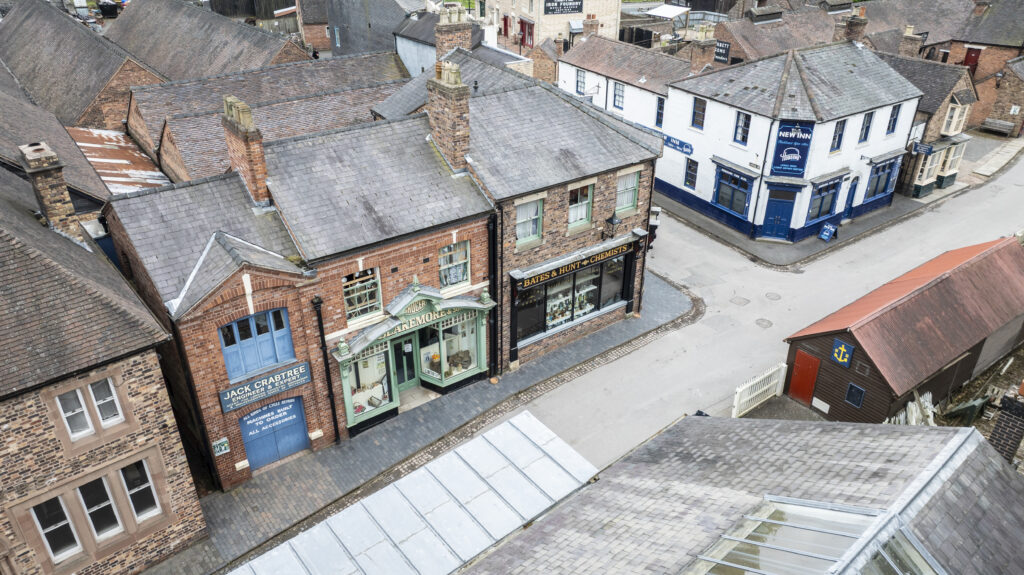
Taking on responsibility for the Gorge’s 10 museums, 35 listed buildings and 400,000 collection items is a huge undertaking and considerable transition work has been taking place.
In March, when the agreement was announced, the museums were closed for necessary assessments and works. This included the complex operation of installing new IT infrastructure, needed to operate tills, membership and ticketing systems.
Blists Hill Victorian Town, Coalbrookdale Museum of Iron and The Furnace Kitchen café re-opened to the public in May and Jackfield Tile Museum in June. Heritage Weekends are planned at Coalport China Museum and Broseley Pipeworks in September (11-13 and 18-20). There will be a phased re-opening of the remaining visitor attractions.
The transfer has already given the Ironbridge Gorge sites, which had suffered a slump in visitor numbers in recent years, a welcome boost.
“Interest in the sites among National Trust members has skyrocketed since the announcement in March,” says Lauren Collier, the NT’s Property Curator for the sites. “It’s very encouraging for the future.”
Safeguarding these treasured historic sites for the future was the main driving force behind the NT’s acquisition, Lauren explains.
“At their height the attractions were drawing in 500,000 visitors a year. In recent times that had dropped to 300,000 and the trajectory appeared to be continuing downwards. There were many factors including Covid, flood damage and a rise in employment costs which inevitably drove up admission prices at a time when many people were struggling to afford them anyway.”
She believes the NT, with its huge national support network, marketing machine and reservoir of expert talent across many areas of heritage – not to mention its 5million members – will help to turn the tide.
Lauren, who heads a team of three in the curatorial department, was one of several expert staff recruited by the NT from the IGMT, for who she had worked since 2017.
“We are getting to understand the National Trust’s way of working and they are keen to learn from us. We are obviously in a transitional period but it’s working very well. The National Trust has established experts in place who can help us to develop our sites and collections – specialists in textiles, archive photographs, conservation and so on. There is a lot of help to draw on.”
Lauren leads curatorial planning, object research and the development of exhibitions and displays across the Ironbridge Gorge museums, creating interactive attractions at which at team of around 50 professional costumed story-tellers are at the heart. These are mostly based at Blists Hill Victorian Town, where 19th century Shropshire is brought vividly to life.
“I look at how we tell stories to make them both fun and educational, leading historical research to ensure authenticity. We work closely with the costume department. We have such a talented team of costume makers who provide outfits not just for Blists Hill but other of our attractions when needed. They also make costumes for themed events like Halloween for instance – and they are sometimes in demand from other organisations. They are brilliant.”
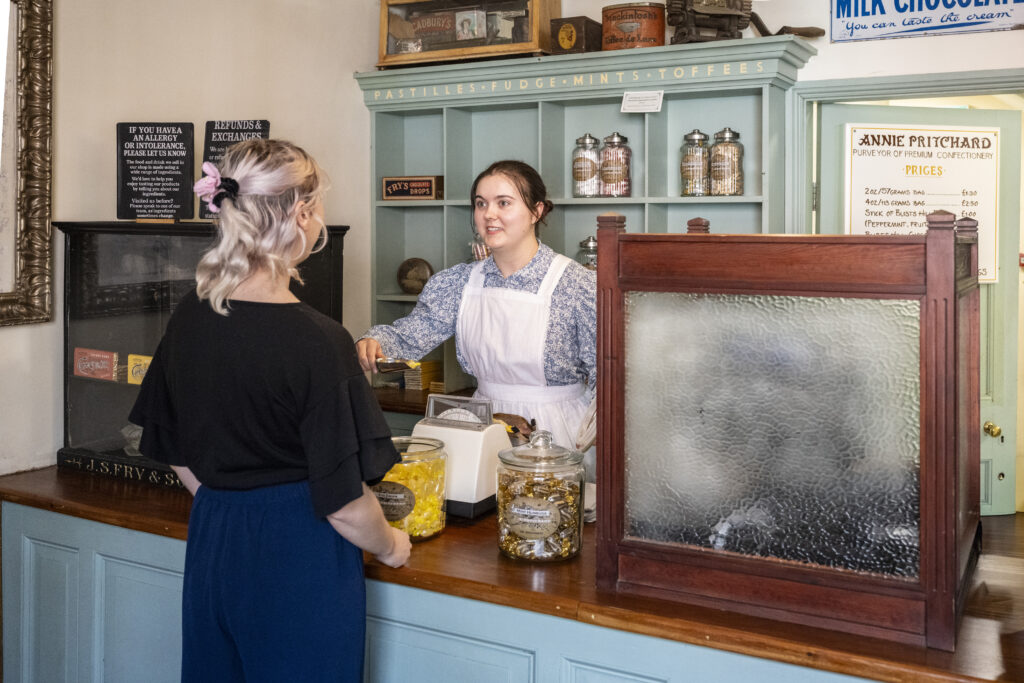
All this is a perfect fit for the National Trust, which is not short on costumed story-tellers and well-informed guides at its historic sites.
Paul Forecast, Regional Director for the National Trust in the Midlands, is in no doubt of the huge significance of the NT’s new acquisition, observing: “This is a very poignant and exciting time for us, as we take on the care and management of sites widely regarded as the birthplace of the industrial revolution. It has been a long journey to get here and I’m grateful to everyone who has worked hard to get us to this point.
“We are welcoming staff and volunteers from IGMT into the National Trust and working alongside them to benefit from their extensive knowledge of the special places entering our care.
“We know our members will be excited to visit, but please bear with us as we work on what’s needed to be able to welcome them.”
The transfer sees the NT become custodian of a collection of sites with World Heritage status. It includes responsibility for the conservation and management of Blist Hill Victorian Town, Coalbrookdale Museum of Iron, Enginuity, the Old Furnace, the Darby Houses, the Museum of the Gorge, the Iron Bridge Tollhouse, the Tar Tunnel, Coalport China Museum, Jackfield Tile Museum and Broseley Pipeworks, plus the Furnace Kitchen café and restaurant.
This portfolio of sites has been built up over the past 60 years under the management of the IGMT, so during this transition year, the National Trust is intent on spending time listening to and learning from everyone who has an interest in their future.
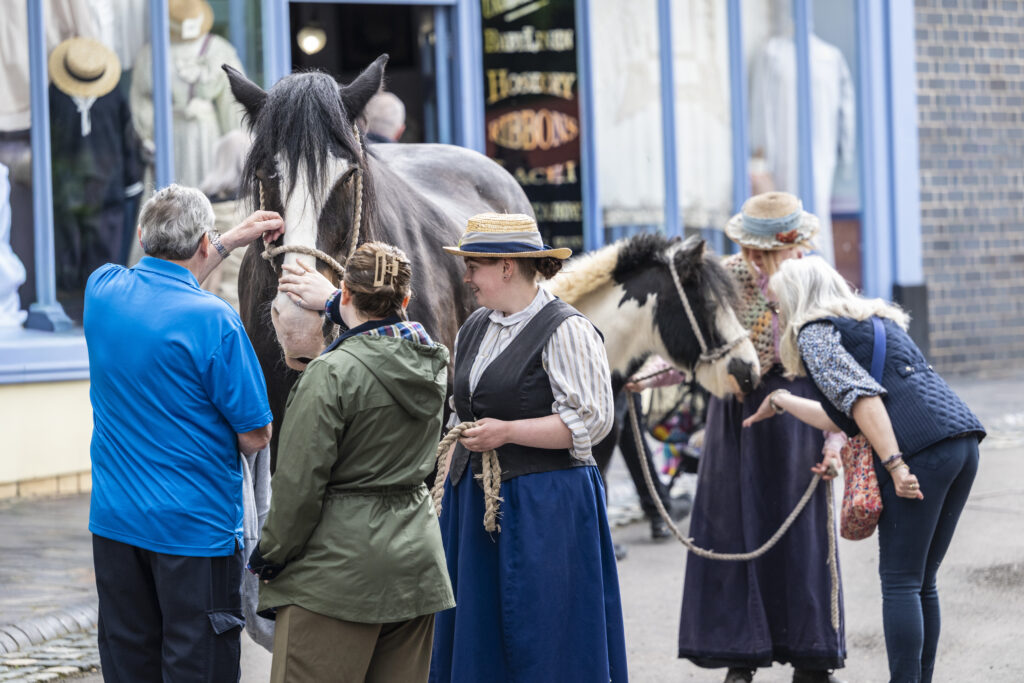
Claire Tafft, the National Trust’s project lead for visitor experience at Ironbridge said: “We know how much people love the Ironbridge Gorge sites already and want to reassure everyone that they won’t be changing too much.
“We genuinely want to understand how people would like to experience and get involved with these significant places in the future, and in this first year we are taking time to listen and understand. We are working with communities and visitors to build on IGMT’s legacy and help shape what the future looks like.”
Once the necessary work has been carried out, National Trust members will be able to access all the museums in Ironbridge Gorge for free, as part of their membership – bringing considerable additional spin-off trade into the area.
Mark Agnew, Project Director for the National Trust at Ironbridge Gorge, said that a huge amount of work behind the scenes had enabled three of the most popular visitor attractions – Blists Hill Victorian Town, Coalbrookdale Museum of Iron and the Furnace Kitchen – to re-open in time for the May half-term holiday.
“Blists Hill, and the chance to step into the sights, sounds and stories of Victorian life in the Gorge, is loved by so many people both locally and across the country, so we worked hard get it open in time for half-term.
“Over the coming months, we’ll continue to develop the experience, reintroducing popular activities and demonstrations, while also introducing new ones shaped by visitor feedback. This is just the start of a long-term vision and we are excited for what the future holds.”
Claire added: “The Victorian shops and cottages all had a spring clean and the costumes were all pressed ready for the storytellers and craftspeople to share what everyday life was like in industrial towns like Blists Hill.
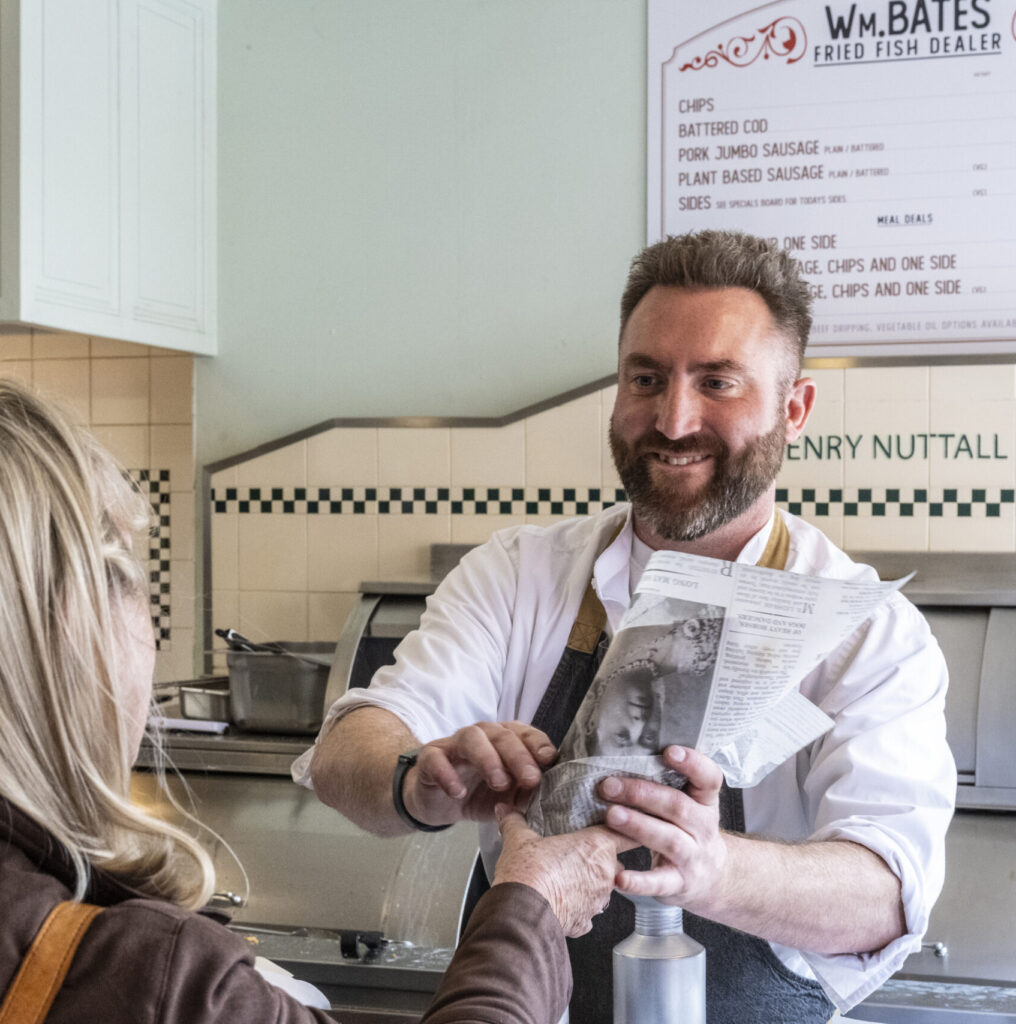
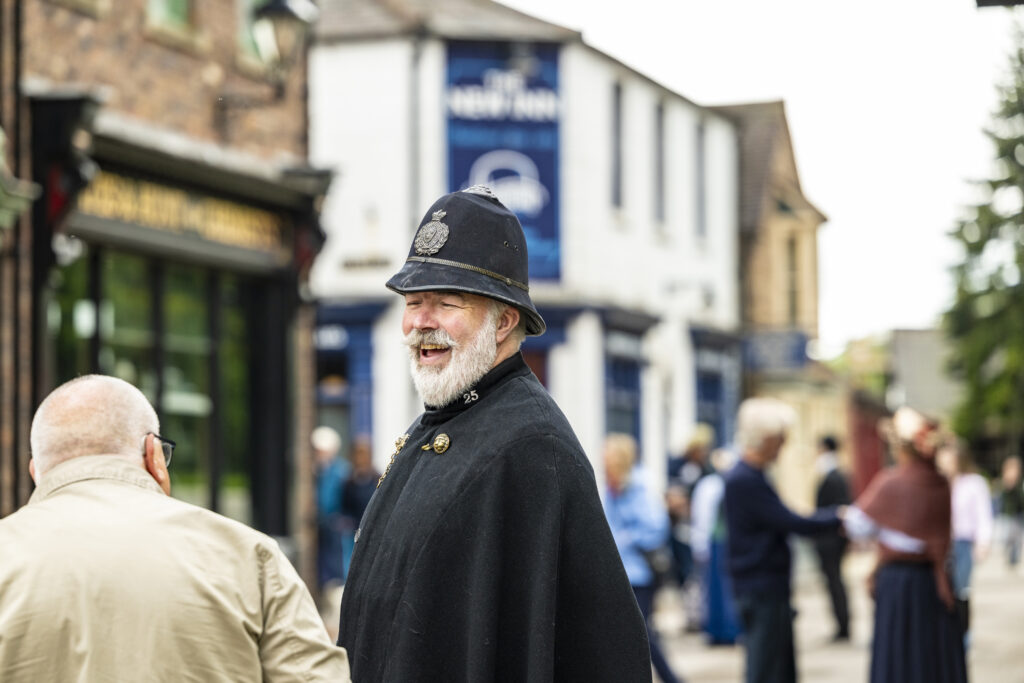
“Returning visitors will find that some things feel familiar, such as the ever-popular pub and chip shop, as well as familiar faces such as Constable Jarrett keeping everything in order.
“Visitors can look forward to lessons in the Board Schoolroom, the chance to dress up as a Victorian in the Photography Studio and explore the Madeley Wood Outdoor Play Area.
“Some well-loved experiences, including horse-drawn carriage rides, steam exhibits and forge demonstrations, are expected to return in the coming months, when we’ve worked through these more complex elements.
“As a living, evolving town, Blists Hill will continue to be restored over time. We appreciate everyone’s support as we begin this new chapter, and we look forward to sharing what’s still to come.”
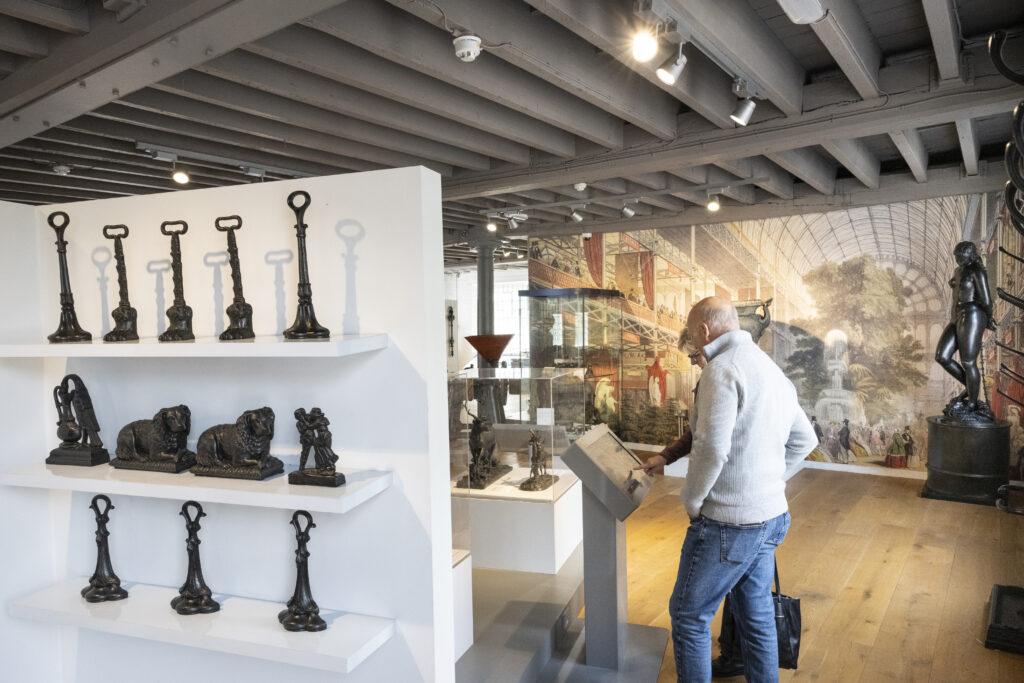
Mark added: “Our goal is to grow the number of people that visit these wonderful sites, tackle the barriers that often prevent people from engaging with heritage, and continue to deepen the strong appeal for families, through events, programming and storytelling, that bring the Gorge’s unique history to life.
“In this first year, we want to hear from everyone who has an interest in this hugely significant place and there will be plenty of opportunity for conversation. This will help us to not only secure the future of Ironbridge Gorge but also to help us develop the overall visiting experience.
“We are already listening, and following feedback, we are pleased to be making car-parking free for visitors to Blists Hill and the Coalbrookdale sites.
“Our overarching aim is to get Ironbridge Gorge into a sustainable financial condition and to do this we need people to visit and support us on this journey.”
The international importance of the Ironbridge Gorge as the cradle of the Industrial Revolution was underlined once again this July. A collection of historic documents, telling the story of the construction of the world’s first iron bridge, were recognised for their significance by UNESCO (United Nations Educational, Scientific and Cultural Organisation).
The building records were originally submitted for inclusion in the UNESCO UK Memory of the World Register by the IGMT in 2024. This summer UNESCO confirmed their inclusion on the register, which recognises ‘documentary heritage of outstanding national and regional importance’, safeguarding rare and irreplaceable archives while ensuring they remain accessible to everyone.
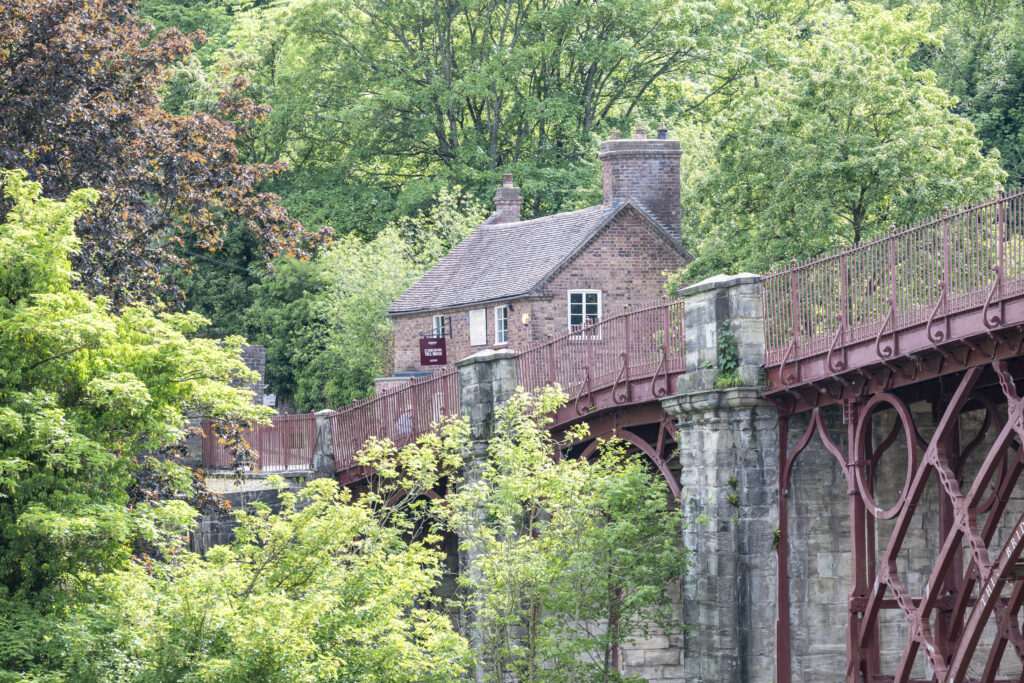
The records relate to the creation of the iconic Iron Bridge, which spans the Severn and sits at the heart of the Ironbridge Gorge UNESCO World Heritage Site. Completed in 1779, the bridge was the first structure of its kind in the world, and its creation marked a turning point in engineering and construction, demonstrating the potential of cast iron on an unprecedented scale.
Such was the world fame of the bridge that a town bearing its name inevitably grew around it.
As the iron trade in the area around the river’s banks expanded and river use increased, a bridge became necessary. Local ironmaster Abraham Darby III was commissioned to build it to a design by Thomas Farnolls Pritchard.
UNESCO has recognised the significance of three documents, namely:
Abraham Darby III’s original cost estimate (September 1775), prepared with architect Pritchard. The document details the projected cost of constructing the bridge, associated roadworks, and financing arrangements including loan interest.
Abraham Darby III’s Ledger for 1771-1781, covering a variety of Darby’s business activities, including the building of the Iron Bridge and documenting the crucial period up to and including the completion of the bridge.
Abraham Darby III’s personal share certificate, dated 20 October 1777.
Collectively, these documents also reveal the financial context for the building of the Iron Bridge, including the names of individuals involved in the project, such as investors and suppliers of goods, services and labour. They also provide a timeline for the project’s progress and for key events relating to the building of the bridge between September 1775 and February 1781.
Abraham Darby III, who came from a family of Quaker ironmasters and inventors, managed the Coalbrookdale Company ironworks, where the Museum of Iron is currently located. Building the bridge was a way to demonstrate the capabilities of his company and the versatility of cast iron for architectural use. While the project proved transformative, it also came at a cost with construction soaring above the initial estimate, and Darby remained in debt at the time of his death in 1789.
Rachel Hosker, Chair of the UNESCO UK Memory of the World Committee, said the documents’ inclusion on the World Register recognises both their national significance and the importance of preserving them and making them accessible for present and future generations. She said the Iron Bridge records demonstrated the “newness of such technology and science being developed in the Industrial Revolution in which the UK played a significant role.”
Sarah Roberts, Archivist for the National Trust at Ironbridge Gorge, said: “We are delighted that these documents have been recognised by UNESCO in this way. This collection of documents, which are part of a much larger archive, shines a spotlight on the vision, and the desire to innovate, shared by the Abraham Darby III and Thomas Farnolls Pritchard. Their revolutionary ideas, combined with their ambition and determination, were to prove truly world changing.
“Unusually, these documents are still retained in the place where they were produced almost exactly 250 years ago, and the archive itself is recognised as an integral part of the UNESCO World Heritage Site within which it sits. As we prepare to celebrate the Quarter Millennial of the original Iron Bridge in 2029, we have every confidence that this acknowledgement of the significance of the archive will inspire further research into the incredible innovations, people, and events associated with the Ironbridge Gorge.”
Due to their fragile condition, the three documents cannot be permanently displayed, however, they have been digitised and transcribed, ensuring they are accessible to researchers and the public.
The National Trust and the Ironbridge Gorge museums and historic sites look to be an ideal fit for one another. A perfect partnership, you may say.
The National Trust receives around 25 million visitors a year to its pay for entry sites. The charity was founded all those years ago for the benefit of the whole nation. Some 5.4 million members, funders and donors, and tens of thousands of volunteers support its work to care for nature, beauty, history for everyone, for ever.
The Ironbridge Gorge museums could hardly be in safer hands.
All photos@National Trust Images, Paul Harris